There are many things a human can do that a robot can not, and vice versa. Robots are able to carry out a variety of tasks that humans are unable to do. For example, us humans are obviously able to think and breathe unlike robots. We are also able to form our own identities.
New digital technologies have brought us "Chatterbots". This is where we humans are able to simulate a an intelligent conversation with an online robot. However, these chatterbots are unable to process natural language due to not being sophisticated enough. They reply to us humans with set phrases from a database and only give an impression of understanding what we say.
I tried out four chatterbots and found many differences between the conversation style. When talking to A.L.I.C.E(Artificial Linguistic Internet Computer Entity) it felt like I was having a general conversation with a friend as she was able to hold a conversation and was the only chatterbot who made sense. As for ELIZA, I tried out a few conversations with her and noticed she liked repeating herself. Many of her replies involved saying "can you elaborate on that?". This conversation was quite weird as I also noticed that she would answer my questions with a question and felt that she was just repeating what I was saying. I also tried out Cleverbot and Jabberwacky. When conversing with Jabberwacky I felt that the bot tried to be more interesting and entertaining than the other bots. As for Cleverbot, I was left confused after our conversation and this bot believed that it was human?!
My Conversations with the chatterbots
 |


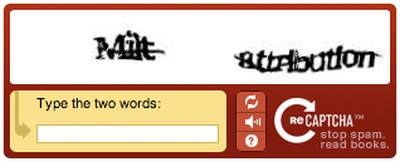 |
| An Example of CAPTCHA |
CAPTCHA and Chatterbots are just two examples of Hard AI. This is where scientists try to understand how our brains functions by creating machines that carry out human actions and think like us. However, with the increasing amount of new digital technologies, the boundaries between human and machine become less clear. Why? Because human characteristics and AI are constantly being included in robot design!


